(Adapted from a homily for the feast of the Nativity of S. John the Baptist.)
We moderns can have a bit of trouble understanding the deep seriousness of this scene. We often conceive of baby names as being determined mostly by what sounds good to the parents, or goes well with the last name, or simply something interesting, a talking point for other parents when we introduce our babies. The more pious among us may seriously consider saint names for our children, to give them friends and intercessors as they grow up. Here in this episode from Luke’s gospel, we have what seems to be a typical moment: “We’ll name him Zachariah Junior.” There’s nothing wrong with that. But Elizabeth rejects the name, choosing “John” seemingly out of thin air. So they go to his father, her husband, who has been mute for these nine months, ever since that very strange episode in the Temple, when he went in to perform his priestly ministry and came back out dumbstruck, having seen some sort of vision. “His name is John,” he writes.
The Jews had a strong understanding of the meaning of names. We lose this aspect in English, because most of our names don’t “mean” anything. They might be associated with social figures, or have a certain “ring” to them, but very few names in English have any actual meaning as English words. For the Jews, though, names were usually a shortened version of a whole sentence. “Joshua” means “The LORD saves,” and “Elijah” means “My God is the LORD.” Incidentally, “Zachariah” means “The LORD remembers.” This is a fine name for the elderly priest whose prayers for a son were finally answered. The LORD had remembered him in his distress. But it was not to be the name for the miraculous son. Something new is happening here. “His name is John.”
“John”–the English spelling of a Jewish name that would have been something more like “Yohanan”–means “The LORD has given grace.” For the LORD has indeed given grace. The time of the prophecies is fulfilled: the time of the Messiah and His kingdom is at hand. The LORD sends his grace into the world, and not only His grace, but His very presence, incarnate in the womb of the Virgin Mary. No longer do the prophets foretell One who is to come, but they rejoice in His arrival. The last and greatest of the prophets, the one who had the privilege to see his Lord with his own eyes and point him out with his own hand, this John has already received grace by the Lord’s arrival. He is washed clean of the stain of sin inherited from our first parents by his rejoicing act of faith from within his mother’s womb. And by the prophetic spirit of the son, the mother and father also prophesy. “His name is John.”
With that declaration, the father’s mute lips are opened, and he sings a song of praise of the LORD, the God of Israel, who has at long last “visited His people and set them free.” He has remembered His covenant: that the children of Abraham might be set free to worship Him in uprightness and truth, without fear of enemies, because He Himself has come to dwell among them and redeem them from their ancient slavery, not merely of physical bondage to the Egyptians and Babylonians, but to the enemy of our souls, Satan and his ensnaring bonds of sin. Our God has set us free, Zachariah chants: note the past tense. By His incarnation, the Son of God has already begun the work of redemption and salvation. Mankind, joined to the divinity in the Person of Jesus, is already sanctified, though the full effects of that sanctification will have to wait for the Passion and Resurrection. No longer is the world waiting for a savior: He is come. The LORD has given His grace. And so, this boy must be named to indicate that: “His name is John.”
The Baptist gives us a model, too. He was cleansed of any stain of sin from before he was born, and the tradition of the Church holds that he committed no personal sin while on earth. Jesus Himself testifies to this, saying, “among those born of women none is greater than John.” He had no sin of his own to atone for on earth. And yet his entire life was spent in penance and self-denial. He was drawn into the desert by the Spirit of God, who trained him in the life of prayer and mortification. He ate bugs and honey, wore rough clothing, slept in caves, and denied himself the company of other men. He did this, not because he himself was a sinner, but precisely because he had received God’s grace of sanctification. In the face of that immense gift, he recognized his own unworthiness to receive it. He humbled himself before the great God who had loved him. God’s love and grace did not preclude John’s response of humility–indeed, they elicited it. So it is with us, who have not kept ourselves sinless, and have received even greater gifts of grace than John did. We deserve to do even greater penance for our sins that we ourselves have committed, while John had no sins to repent of. We have received the gifts of baptism, Eucharist, and conformity to Christ in His Church, and the least member of Christ’s Body, having received the grace of the New Covenant, is greater than even the greatest one under the former covenant. And so we too ought to devote ourselves to lives of penitence and mortification. We do so not only for our own sins, but out of gratitude to our infinitely-loving Father who has sent His Son into the world to be our peace and reconciliation. We do so in order to express our recognition of His greatness and our unworthiness, and to give witness to our faith that the grace of God is received by a humble heart. But, paradoxically, we humble ourselves as an act of thanksgiving for already having received that grace. For God’s grace goes before us: it is He who has converted us to Himself. “He has visited His people and set them free.” He has shown us His grace. And this is why “His name is John.”
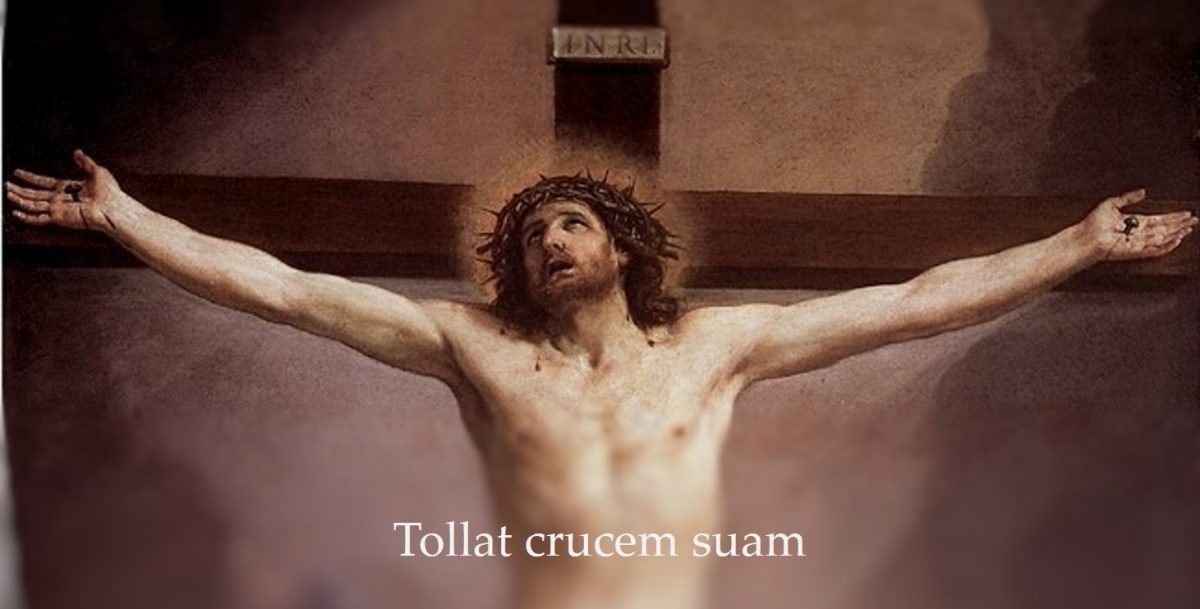
 Tollat crucem suam