“Let us praise the Lord in honor of blessed Martin.”

The feast of Saint Martin of Tours is one of the oldest feasts in the Church for a saint who was not a martyr. Saint Martin lived in the mid-300s, a time when the age of the martyrs had drawn to a (temporary) close, after Emperor Constantine’s edict granting legal protection to Christians throughout the Roman Empire to worship God. But Christians had become accustomed to the idea that it was external persecution that purified the faithful and made them fit for heaven. There was a certain worry that, if there were no more martyrdoms, there would be no more path to heaven.

It was in this context that the great confessor saints begin to rise. Saint Anthony of the Desert taught the Church by his very life that a Christian’s steadfast observance of God’s law, along with a life of earnest prayer, is just as much a battle–with just as great a prize–as that of bloody martyrdom. His motto might have been, “If the devils are no longer attacking us in the cities, let us go out to the wilderness to do battle with them there.” Saint Martin, in the Christian West, gave a similar example. From a young age, he had been enrolled in the Roman army. It was during his service that one of his famous works came about: he came across a poor man, barely clothed (and certainly too lightly for the winter chill) outside Amiens. Martin took his sword, cut his heavy soldier’s cloak in half, and gave the one half to the poor man. A Roman soldier owned half of his equipment–the other half was paid for by the army–and so, in effect, Martin was giving the man all that belonged to him. That evening, Martin saw a vision of Christ clothed with the half of the cloak Martin had given away. Christ was telling His angels, “Martin clothed me with this, and he is only a catechumen.” It was as if to say, “What you do for the least of my brethren, you do for Me.”

Martin sought baptism soon after this vision, moved by Christ’s love for him. He was made an acolyte, and eventually he was elected bishop of Tours. His charity, patience, and prudence were widely renowned. In particular, Martin was an adept mediator of disputes. As an elderly man, he went to bring peace in a dispute among his clergy in the town of Candes. Having succeeded in his mission there, he fell ill and knew that his death was approaching. The faithful who were traveling with him were distraught at the prospect of losing their faithful shepherd: “Savage wolves will attack your flock, and who will save us from their bite when our shepherd is struck down?” Martin, moved by such a piteous plea, prayed to God, “Lord, if your people still need me, I am ready for the task. Thy will be done.”

The liturgy commemorates this beautiful moment of pastoral solicitude in the Matins responsory: “O man truly blessed, Bishop Martin, who neither feared to die nor refused to live!” This can be our lesson: all things are for the sake of God’s will, and the coming of His kingdom. We advance that kingdom, which is indeed a spiritual kingdom, even by the very concrete and material assistance we give to the poor. This world matters, not because it endures forever, but because it is here that we determine to serve God or to refuse His service. And what we do in charity for the least of Christ’s brethren, we do for Him, which is what makes them return to Jesus, “glorifying God in a loud voice” as the cured leper in today’s gospel did. At the end of this life, the one who is faithful to God in service to the poor will hear those sweet words of consolation: “Well done, good and faithful servant: you have been faithful in a small matter: I will place you over great things. Come, enter your Master’s joy.”

Saint Martin, pray for us!

The Watchman sounds the alarm.

“You, son of man, I have appointed watchman for the house of Israel; when you hear me say anything, you shall warn them for me. If I tell the wicked, ‘O wicked one, you shall surely die,’ and you do not speak out to dissuade the wicked from his way, the wicked shall die for his guilt, but I will hold you responsible for his death. But if you warn the wicked, trying to turn him from his way, and he refuses to turn from his way, he shall die for his guilt, but you shall save yourself.” (Ezekiel 33:7-9)

The prophet of God has the office of delivering the messages of God to the people of God. He is the intermediary, the go-between, so that the people will know what God wills. The people need the prophet because God is a hidden God, a God who is profoundly other than the world He has created. This otherness is good, because God is calling us to join Him in that otherness, that consecration as separate from the things of merely natural life. We have a heavenly calling, a calling to adoption as children of God, and when we are brought home to heaven, we will be like God, because we will see Him as He is. But while we are still on earth, God is hidden from us, and so we need to seek Him. We need the prophet to point Him out.

Now, faith in God is to believe in God: to believe in who He is and what He commands. Faith leads to love, because God is supremely Good, the source of all good, and if we recognize God as good, then our hearts will yearn for Him and love Him. But if we love Him, then we will keep His commandments. (John 14:15) So true faith is demonstrated in love, and love is demonstrated in good works. You cannot love God and at the same time despise His commands.

So the Christian life is a life of both faith and morals. There is content to our faith which we must believe—There is one God, and He is a Trinity of Persons, Father, Son, and Holy Spirit; The Son of God became incarnate of the Blessed Virgin Mary; He suffered death on the cross for our redemption; and He gave us His Body and Blood in Holy Communion to eat so that we could receive divine life from Him—these are specific things that we believe about reality, which were revealed by God Himself and are passed down to us through His Church. There is also (in addition to faith) a moral law, which we must observe. And, once again, the Church is the guarantor and infallible teacher of that moral law.

Now, there are parts of the truth of reality that are available to anyone to know. For example, you can know there is a God just by looking around you and seeing His creation. It has to come from some supremely powerful Cause, and you can know about this Cause from the order that you see around you. Saint Paul argues this in his letter to the Romans, saying that the Gentiles have no excuse for their false worship of idols, since the One God can be known naturally (even if you can’t know all the hidden stuff, like the fact that He is Trinity). Similarly, there are elements of the moral law that are available to anyone who has a brain: things like “Murder is evil,” and “Justice is good.” This is called the natural law, and it is knowable just from looking around you and recognizing the voice of conscience as you consider different actions.

But human beings are weak, and we get a lot of things wrong, even while we’re trying to get things right. So the Church acts as God’s messenger, God’s prophet, to teach the truth about faith and morals without error. The Church is God’s divinely-appointed teacher—and not just divinely-appointed, but divinely-created—to teach what is to be believed and what is to be done. Faith and morals: the Church has infallible teaching authority on these two subjects. That doesn’t mean that every time some priest or bishop speaks, he must certainly be correct; but it does mean that when the Church, as a whole, teaches some matter of faith or morals to be revealed by God, there can be no error in that teaching. That’s why God sends His prophet: so that we can know Him and love Him.

The first principle of the moral life is “do good and avoid evil.” Sounds pretty straightforward! But then you get into the situations of daily life, and the details start to get messy. The principle is not ever wrong, but sometimes it’s not obvious what is good and what is evil, what is to be done and what is to be avoided. This is why we should do things like seek virtue: the virtuous man knows more connaturally what is good. If you’re courageous, you are better able to know and to do the courageous thing more naturally. If you’re more temperate, then being temperate becomes easier; if you’re more just, more honest, more chaste, more kind. Seek virtue. In order to grow in virtue, it’s very useful to regularly examine your conscience: “What did I do right? What did I do wrong? How am I going to avoid the wrong and do the right in the future?” And in order to know the right and the wrong, you need to study.

One of the elements of the moral life that is often overlooked is called complicity in sin. Basically, it’s possible for you to sin by being an accomplice in someone else’s sin. You didn’t do the evil thing, but you helped in some way: and that’s evil.  What are the ways that I can be an accomplice in someone else’s sin?

  • By counsel: Giving advice to do something evil.
  • By command: using authority to require something evil.
  • By consent: giving permission or saying that it’s okay to do something evil.
  • By provocation: teasing, daring, goading, irritating, or presenting the occasion of sin.
  • By praise or flattery: complimenting a person for doing something evil.
  • By concealment: hiding the evidence of something evil, helping someone get away with evil.
  • By partaking: receiving material benefit from something evil.
  • By silence: refusing to rebuke the evildoer when the opportunity arises.
  • By defense of the ill done: arguing that evil is not evil.

Our civil law even recognizes some of these categories. Deliberate concealment of a burglary makes you an accomplice to that burglar. Receiving stolen goods is illegal. An auditor who stays silent about illegal business practices is liable to criminal penalties. But it’s not just criminal matters. These modes of complicity apply to the whole moral life. You don’t have to be an accomplice to a murder to be guilty of a sin. So, if your friend comes to you about some difficult situation, you have a duty to counsel her to do the good. If a coworker is doing something wrong, you ought not to pass over it in silence. You shouldn’t provoke other people to anger or gossip. Parents: you have a duty to teach your children to be good, and to rebuke them when they do evil.

Now, I’d like to touch on one particular area of the moral life in which the danger of complicity is very close and very large. Every citizen has a duty to promote the common good of his society, and in a democratic polity, the vote is a primary way in which a citizen exercises this duty. By voting, you choose representatives who enact law for the promotion or for the harm of the common good.

I am not here to tell you how to vote. That’s not my job, and it’s not my concern. But I am here to instruct you on forming your conscience for your moral duty as a citizen. I have a sacred office and a divine mandate to teach the faith and the moral law. I am the watchman.

The most grievous offence a person can commit against another person is murder. But even murder admits of degrees. Murder in cold blood is worse than murder in the heat of a moment. And murder of a child by her parents is the worst possible kind of murder. In our country, the direct killing of infants by their parents has been legal by federal statute since 1973. Since that time, nearly sixty million babies have been killed by their parents. Perhaps as many as a hundred million Americans alive today are murderers. And sin affects you. If you commit murder, you become a murderer. Is it any wonder that our political discourse is so poisonous? Is it any wonder that there is so much civil discord? We live in a nation of murderers! And we have allowed it! Silence is complicity! Defense of the wrong done is complicity! To consent is to be an accomplice, in a more or less remote way!

We—each one of us—have a duty as citizens and as Catholics to oppose abortion in the strongest terms. This includes, but is not limited to, the use of our duty to vote. Again, I am not here to tell you how to vote. But let me point something out: One of our major political parties has made abortion a central plank, a fundamental element, of their party platform. It is not possible to be a Democrat without supporting abortion access. Some Democrat politicians went to the national organization earlier this year to petition to be allowed to be not-pro-abortion, and they were denied. The Democrat party votes as a block, at the federal and the state level, to promote abortion in this country. And if you vote them, you are complicit in their crimes.

Let me make it clear, once again. I am not telling you to vote for anyone. And I understand that none of the parties and none of the politicians gets everything morally right. But abortion is the single most grievous crime that can be committed, and in our country it is committed on a scale far greater than any other crime. Abortion causes about 20% of all deaths in our country. Until we get this issue right, nothing else matters. This is why the Democrat platform is so evil: because until they take abortion off the table, no person of good will can vote for a Democrat in good conscience. Honest political debate is necessary to a civil polity, and people can honestly disagree about the best policies to pursue on different matters. But for right now, one of the major political parties has deliberately removed themselves from honest consideration by Catholics and anyone else who recognizes the moral law.

So, what are we going to do about it? I’m sure that some people are cheering as I say this, and some people are very angry. If you are angry that I am speaking in this way, I humbly ask you to consider this: Catholics make up a big chunk of the Democrat voter base. What if every Catholic told their candidates, “I will not vote for you until abortion is removed from the platform”? First of all, the Democrats would lose nearly every single district in the entire country. But what next? They would be forced to change. They are political animals: they will respond to political pressure. If every Catholic told them, “I will not vote for you until you change your stance on abortion,” they would change it, because they would never win another election without it. Your duty as a Catholic comes before your loyalty to party—and that goes for everyone. You can promote or favor liberal and progressive policy, but only after abortion is taken care of. You have a chance to bring about the greatest political change this country has seen in generations. And it can happen nearly overnight, if we decide to do it. Think about that: a country in which abortion isn’t even considered a political issue, because it’s been resolved in favor of life. We Catholics have that opportunity. So, my friends, seriously consider your duty as citizens, and as Catholics.

And let me read to you one more time the warning to the watchman. “If I tell the wicked, ‘O wicked one, you shall surely die,’ and you do not speak out to dissuade the wicked from his way, the wicked shall die for his guilt, but I will hold you responsible for his death. But if you warn the wicked, trying to turn him from his way, and he refuses to turn from his way, he shall die for his guilt, but you shall save yourself.”

Praised be Jesus Christ! Now and forever!
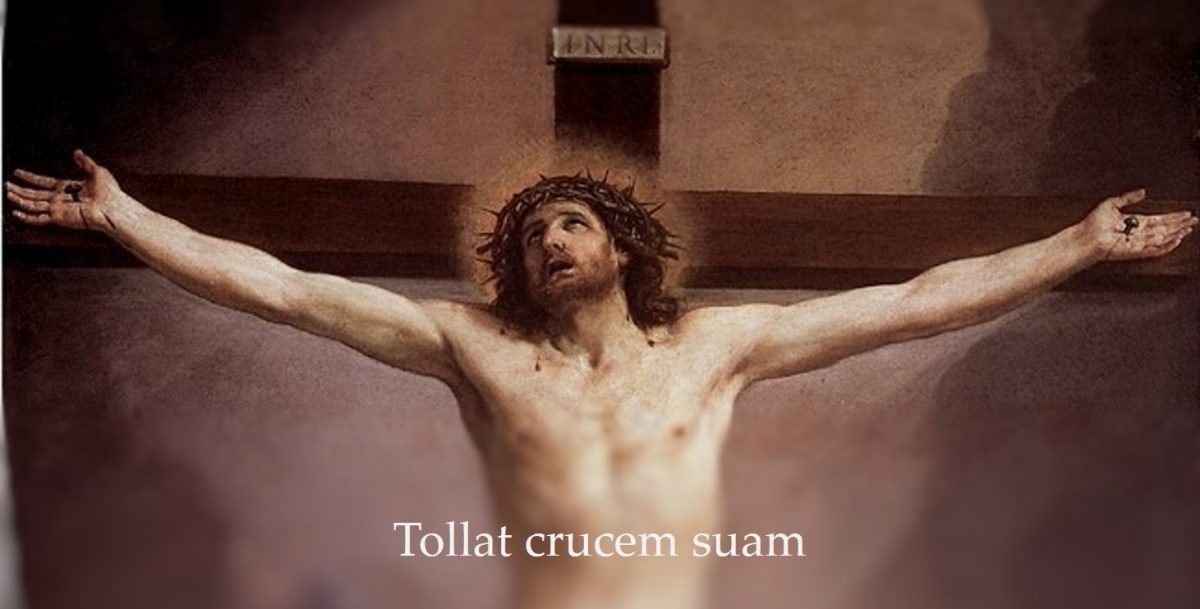
Beati qui non viderunt.

(Adapted from a homily for the feast of Saint Thomas.)

“Unless I see the mark of the nails in His hands and put my finger into the nailmarks and put my hand into His side, I will not believe.” With such words, Thomas the Apostle states his position on the re-appearance of Jesus, His Master, whom he had followed from Galilee to Jerusalem and death. And while Thomas is often described as “the doubter”, his condition for belief teaches us something important about the faith we share with him: it is incarnational. Our faith in God is not a matter of “pure spirit”: it is faith in the God-made-man, Jesus of Nazareth. It is not a matter of small or accidental importance that we believe in “Jesus Christ”, as our Creeds give us to say. Our belief is not in an invisible God, but in a God who came down to earth, who became truly one of us in order to save us. This Jesus, a man among men, is in fact the Son of God. But He is the Son of God made man, and it is the Incarnation that is the pivot point of history and the crux of our faith.

“The Son of God became a son of man so that man might become a son of God.” (To quote Saint Irenaeus, another saint whose feast falls today.) The Incarnation is essential for our Christian faith, because it is essential for our salvation. It was by the Incarnation that human nature was restored to its original dignity, and indeed elevated infinitely beyond that original dignity, for in being joined to the Divine Son, human nature is raised above even the angels. That human nature which the Son of God assumed at His Incarnation was the very nature by which He was able to undergo death for our salvation–God can’t die, but God-made-man can. And it was only because God had a body that God could have a bodily resurrection, of which resurrection Saint Paul says, “If Christ is not risen, your faith is in vain.” It is the Body of Christ that He gives us as food in the Eucharist, so that we Christians might be grafted into His Body and receive adoption as sons, so that we might truly become what we eat. The Body of Christ is essential to our faith.

And besides, it’s not surprising that Thomas wanted to be a member of the same cohort as the rest of the Apostles, to whom Christ “showed His hands and His side” on the evening of Resurrection Sunday, while Thomas was absent. Christ had granted a token of apostleship to the others, and Thomas earnestly desired to be counted in that number. Christ founded His Church upon an apostolic college that had truly witnessed the resurrection, and they would need this witness in order to bear that witness to the world. Thomas–the one who had urged the others to join him in going back to Judea with Jesus “to die with him” (John 11:16)–did not want to be “left out” of that apostolic band, and he knew exactly what was necessary in order to exercise his ministry. In yearning for the physical encounter with Jesus, he demonstrated the necessity of Jesus’ physical resurrection for His apostolic commission. Thomas wanted to be one of the Twelve after the Resurrection, as he had been before. As he had wanted to be united to Christ in death, so also he wanted to be united to Christ in resurrection from the dead.

The physical reality of the object of our faith–Christ’s physical and resurrected Body–shows us that the observance of our faith must also be physical. Jesus used his Body to offer perfect worship to God, and the Apostles understood that they were to imitate that mode of worship. “Present your bodies as a living sacrifice, holy and acceptable to God,” urges Saint Paul. Indeed, our physical offering “is [our] spiritual worship.” The body and the soul are not two distinct realities, but a single whole, by which we join our whole selves to God. This is why authentic Christian worship is physical as well as “spiritual”. This is why we gather as an assembly for Mass, and why we use deliberate postures in our prayer. This is also why the Christian faith has always held the physical creation to be fundamentally good. God created it! And that means that things like alcohol, food, and sex are good! We use wine in order to consecrate the Eucharist, and marriage is a sacrament! But these things are good inasmuch as we offer them as sacrifice to God, inasmuch as we use them for the purpose God intended. The converse of the principle that physical things matter for good when we direct them to the proper worship of God is that they also matter for evil when we abuse them. This is obvious in the abuses of drunkenness and gluttony and lascivious sexual behavior. But it holds true for every created physical thing. And since the Fall has produced disorder in our physical desires, we do well to worship God by offering Him our bodily mortifications. We abstain from meat on Fridays in honor of Christ’s death. We fast. We deny ourselves physical pleasures and willingly endure physical discomfort as an offering to God of our whole selves. Indeed, the mode of the Christian life must be patterned on the martyrs, who offered their whole lives to God in sacrifice, in imitation of their Divine Head. The Apostles teach us this lesson from the very beginning. And the lesson begins from the encounter with the truly-risen Christ in the Upper Room.

And yet, the lesson Thomas teaches is not complete. When Jesus does appear to him and draws him into the encounter he so desires, he demonstrates true faith. For faith is placed in that which is not seen. Faith is in what is not physical. “My Lord and my God!” Thomas saw the body, and he confessed the divinity. He believed in what he could not see, and for that, he serves also as the model for our faith. For we who have not even seen Christ’s Body (except under the veiled signs of the holy Eucharist) are indeed included in His blessing. We too confess Him as Lord and God, who have believed in the testimony of His witnesses. And we need have no fear of being relegated to some lower rank in God’s kingdom just because we happened not to be present in first-century Judea. We are blessed by Christ with the same faith as the Apostles held. We believe what the Apostles believed, and for the same motive: Jesus Christ, the God-man, has demonstrated His power on earth, and we have believed that He is indeed “the Christ, the Son of the Living God.”

(I gratefully acknowledge catholicexchange.com, whose site hosted a reflection on Saint Thomas’ faith that spurred some of my own thoughts in this post.)

“His name is John.”

(Adapted from a homily for the feast of the Nativity of S. John the Baptist.)

We moderns can have a bit of trouble understanding the deep seriousness of this scene. We often conceive of baby names as being determined mostly by what sounds good to the parents, or goes well with the last name, or simply something interesting, a talking point for other parents when we introduce our babies. The more pious among us may seriously consider saint names for our children, to give them friends and intercessors as they grow up. Here in this episode from Luke’s gospel, we have what seems to be a typical moment: “We’ll name him Zachariah Junior.” There’s nothing wrong with that. But Elizabeth rejects the name, choosing “John” seemingly out of thin air. So they go to his father, her husband, who has been mute for these nine months, ever since that very strange episode in the Temple, when he went in to perform his priestly ministry and came back out dumbstruck, having seen some sort of vision. “His name is John,” he writes.

The Jews had a strong understanding of the meaning of names. We lose this aspect in English, because most of our names don’t “mean” anything. They might be associated with social figures, or have a certain “ring” to them, but very few names in English have any actual meaning as English words. For the Jews, though, names were usually a shortened version of a whole sentence. “Joshua” means “The LORD saves,” and “Elijah” means “My God is the LORD.” Incidentally, “Zachariah” means “The LORD remembers.” This is a fine name for the elderly priest whose prayers for a son were finally answered. The LORD had remembered him in his distress. But it was not to be the name for the miraculous son. Something new is happening here. “His name is John.”

“John”–the English spelling of a Jewish name that would have been something more like “Yohanan”–means “The LORD has given grace.” For the LORD has indeed given grace. The time of the prophecies is fulfilled: the time of the Messiah and His kingdom is at hand. The LORD sends his grace into the world, and not only His grace, but His very presence, incarnate in the womb of the Virgin Mary. No longer do the prophets foretell One who is to come, but they rejoice in His arrival. The last and greatest of the prophets, the one who had the privilege to see his Lord with his own eyes and point him out with his own hand, this John has already received grace by the Lord’s arrival. He is washed clean of the stain of sin inherited from our first parents by his rejoicing act of faith from within his mother’s womb. And by the prophetic spirit of the son, the mother and father also prophesy. “His name is John.”

With that declaration, the father’s mute lips are opened, and he sings a song of praise of the LORD, the God of Israel, who has at long last “visited His people and set them free.” He has remembered His covenant: that the children of Abraham might be set free to worship Him in uprightness and truth, without fear of enemies, because He Himself has come to dwell among them and redeem them from their ancient slavery, not merely of physical bondage to the Egyptians and Babylonians, but to the enemy of our souls, Satan and his ensnaring bonds of sin. Our God has set us free, Zachariah chants: note the past tense. By His incarnation, the Son of God has already begun the work of redemption and salvation. Mankind, joined to the divinity in the Person of Jesus, is already sanctified, though the full effects of that sanctification will have to wait for the Passion and Resurrection. No longer is the world waiting for a savior: He is come. The LORD has given His grace. And so, this boy must be named to indicate that: “His name is John.”

The Baptist gives us a model, too. He was cleansed of any stain of sin from before he was born, and the tradition of the Church holds that he committed no personal sin while on earth. Jesus Himself testifies to this, saying, “among those born of women none is greater than John.” He had no sin of his own to atone for on earth. And yet his entire life was spent in penance and self-denial. He was drawn into the desert by the Spirit of God, who trained him in the life of prayer and mortification. He ate bugs and honey, wore rough clothing, slept in caves, and denied himself the company of other men. He did this, not because he himself was a sinner, but precisely because he had received God’s grace of sanctification. In the face of that immense gift, he recognized his own unworthiness to receive it. He humbled himself before the great God who had loved him. God’s love and grace did not preclude John’s response of humility–indeed, they elicited it. So it is with us, who have not kept ourselves sinless, and have received even greater gifts of grace than John did. We deserve to do even greater penance for our sins that we ourselves have committed, while John had no sins to repent of. We have received the gifts of baptism, Eucharist, and conformity to Christ in His Church, and the least member of Christ’s Body, having received the grace of the New Covenant, is greater than even the greatest one under the former covenant. And so we too ought to devote ourselves to lives of penitence and mortification. We do so not only for our own sins, but out of gratitude to our infinitely-loving Father who has sent His Son into the world to be our peace and reconciliation. We do so in order to express our recognition of His greatness and our unworthiness, and to give witness to our faith that the grace of God is received by a humble heart. But, paradoxically, we humble ourselves as an act of thanksgiving for already having received that grace. For God’s grace goes before us: it is He who has converted us to Himself. “He has visited His people and set them free.” He has shown us His grace. And this is why “His name is John.”